
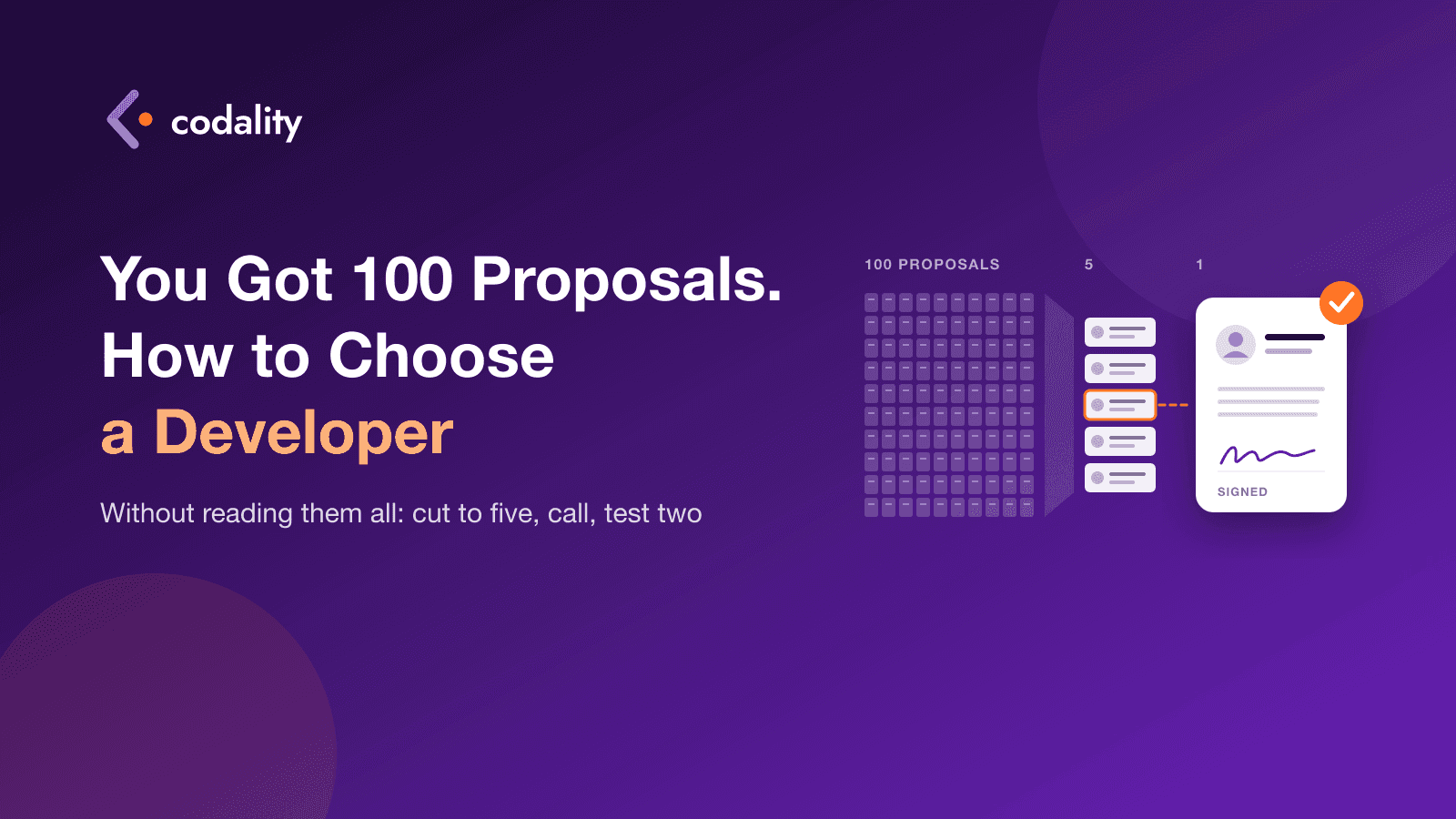
You posted the project, and the proposals keep coming. Between late September and mid-October, the Upwork job posts we read collected anywhere from 50 to 290 applicants each. A SaaS client portal MVP got 265. A request to audit and improve an existing SaaS got 155, and one to check a system built with AI got 86.
Most founders deal with that pile the same way: open the first ten, feel worse, and pick whoever sounded most confident. That's how you end up paying for a rebuild a year later. Here's a slower method that takes less time overall.
Why the proposals all look the same
When a hundred people apply, most of them have read your post for a few seconds. They answer with a template: years of experience, a list of tools, "I can start today". The tool list is the least useful part. One client we read had already given up on it and wrote straight into the post that it wasn't for people who collect technologies in their profile.
You're not looking for the best writer of proposals. You're looking for the person who read your post properly and has built something like it before. Both are easy to check, if the post is written to let you check them.
Step 1: write a post that filters for you
The best filter is set before anyone applies.
- Describe the problem in business words. Who uses it, what they do today, what has to change, and the 3 to 5 things they must be able to do in version one. The one-page brief is enough. A clear brief draws developers who understand the business; a list of frameworks draws people who match keywords.
- Put in a budget range. Hiding it doesn't get you a lower price. It gets you a hundred quotes for a hundred different products.
- Ask one question only a reader can answer. "What would you build first, and what would you leave for later?" works for almost any project. Ask them to start the proposal with the answer.
That last line does most of the work. Anyone who opens with "Dear hiring manager" instead of answering has told you how carefully they'll read your messages later.
Step 2: the first pass
Now go through the pile with three questions, yes or no:
- Did they answer your question, in their own words?
- Have they built something similar, and can you see it: a live link, screenshots, a case with a named product?
- Do they say anything about your project that isn't in your post? A risk, a question, a cheaper way.
Two "no" answers and the proposal goes. Don't read the rest of it. You're not being unfair. You're spending your attention where it has a chance to pay off.
What's left is usually short. Pick the five you'd be happiest to talk to.
Step 3: a short call with five people
Twenty minutes each is enough. Don't ask about tools. Ask about your product.
- "What would you cut from version one?" A good developer will cut something. Someone who agrees to everything will also agree to a deadline they can't meet.
- "How would you make your first change to code you've never seen?" If you already have a prototype or an old codebase, this one matters most. The right answer is reading it, running it and making a small, reversible change. The wrong answer starts with "I'd rewrite it".
- "What will I own at the end?" You want the code in a GitHub or GitLab repository registered to you, the hosting, the database and the Stripe account in your name, and a one-page note on how to deploy.
- "How will I see progress?" The answer you want is a working link every week that you can open on your phone. A status report doesn't count.
Listen for plain language. If they can't explain a problem without jargon, they'll explain your delays the same way.